Empfohlen
Plant Biology · DBG

Review: Growth, omics and imaging methods and roots' responses under multifactorial abiotic constraints

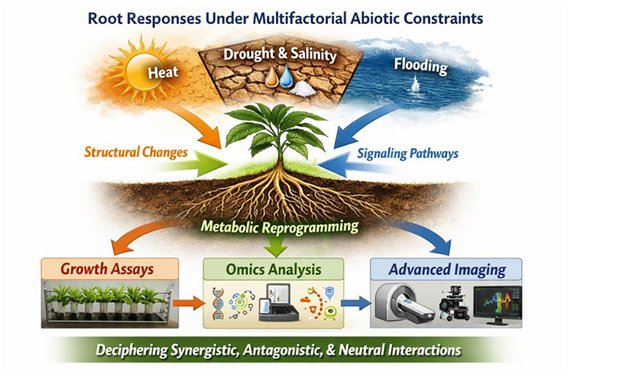
Integrative growth, omics and imaging methodologies taken together to decode root responses under multifactorial abiotic constraints, revealing synergistic, antagonistic and neutral interaction logics essential for predictive stress biology and climate-resilient crop improvement.

Since plants rarely face single stressors in isolation but often encounter multifactorial constraints such as drought x salinity, heat x nutrient limitation or sequential flooding and drought, authors Saini, Nanda, Sachan and Kumar summarize methodological advances that enable the study of root responses beyond reductionist paradigms. The combinations of multiple stressors often produce synergistic, antagonistic or neutral interactions that cannot be inferred from single-stress studies. They analyse growth and performance assays, targeted molecular assays and high-resolution omics technologies and imaging methodologies. The authors also propose integrative frameworks that merge phenotyping, omics and imaging with computational modelling to disentangle the logic of root acclimation under multifactorial conditions. By bridging methodological layers, this review provides a roadmap for advancing plant stress biology toward predictive and translational frameworks, with direct implications for breeding resilient crops in the context of climate change.

Read whole paper in our scientific journal Plant Biology (2026) 

(DBG's members are able to access all Plant Biology papers via our intranet).

DOI: 10.1111/plb.70201
Plant Biology · DBG

Review: Nonsense-mediated decay as RNA quality control mechanism - an opportunity for developing viral interference in plants

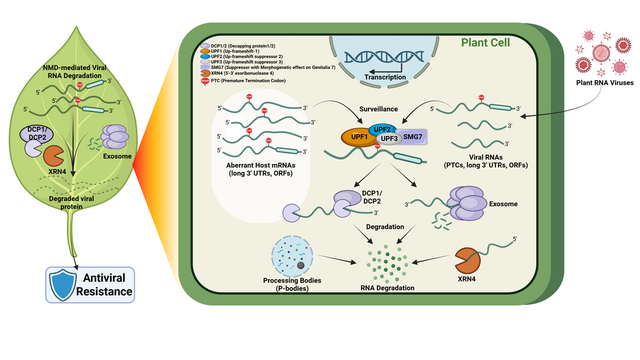
Plant NMD as a central RNA quality control and regulatory mechanism to combat viral attacks in plants, highlighting how plant viruses exploit or evade host NMD pathways to enable successful infection.

Nonsense-mediated decay (NMD) is a crucial RNA surveillance mechanism that not only prevents synthesis of harmful truncated proteins but also keeps an eye on the quality and quantity check of mRNA in an efficient manner for effective gene expression. Since virusses and their hosts are in a continuous arms race to establish establish infection, several families of plant RNA viruses were documented to have NMD substrate features as a by-product. By targeting the NMD pathway, it is possible to reduce the stability of pathogenic RNAs, leading to decreased pathogen viability and resistance. The review by the authors Rana, Luha and Kumar explores the mechanisms of NMD, its role in RNA quality control and the potential applications of manipulating NMD to combat pathogen resistance in agricultural and natural ecosystems. It also discusses the viral system circumventing the host NMD for their successful replication in plants. Moreover, an increased number of studies on the evasion mechanism of RNA viruses from host NMD provide insight into the molecular means of the NMD mechanism and may be linked to device defence strategies in agro-economic plants, which is an interesting future research possibility.

Read whole paper in our scientific journal Plant Biology (2026) 

(DBG's members are able to access all Plant Biology papers via our intranet).

DOI: 10.1111/plb.70176
Plant Biology · DBG

Viewpoint: Strategies to store recalcitrant seeds to conserve plant genetic resources

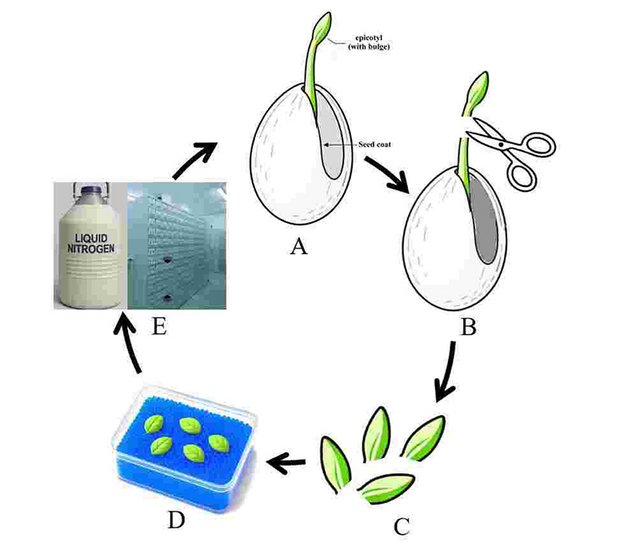
In recalcitrant seeds with epicotyl dormancy, the epicotyl elongates and may form a swollen tuber-like structure. It then pauses growth, functioning independently of the seed. At this stage, it may be excised, dried and stored at about −20 °C or under cryogenic conditions.

Recalcitrant seeds are highly sensitive to drying and chilling, which limits their storage using conventional seed banking methods. In the viewpoint article "Exploring novel and innovative storage strategies for recalcitrant seeds", author K.G. Jaganathan suggests a technique that may be a solution to store these seeds. In recalcitrant seeds with epicotyl dormancy, the epicotyl elongates, sometimes forming a swollen tuber-like structure, then pauses growth while functioning independently of the seed, at which point it can be excised, dried and stored at about −20 °C or under cryogenic conditions. Integrating physiological, molecular and ecological knowledge is essential for developing innovative, tissue-specific protocols to improve seed longevity and conservation outcomes, thereby enhancing biodiversity preservation and agricultural resilience under rapidly changing environmental conditions.

Read whole paper in our scientific journal Plant Biology (2026) 

(DBG's members are able to access all Plant Biology papers via our intranet).

DOI: 10.1111/plb.70199
Plant Biology · DBG

Review: Harnessing benzamides as plant stress inhibitors to enhance crop resilience and stress management

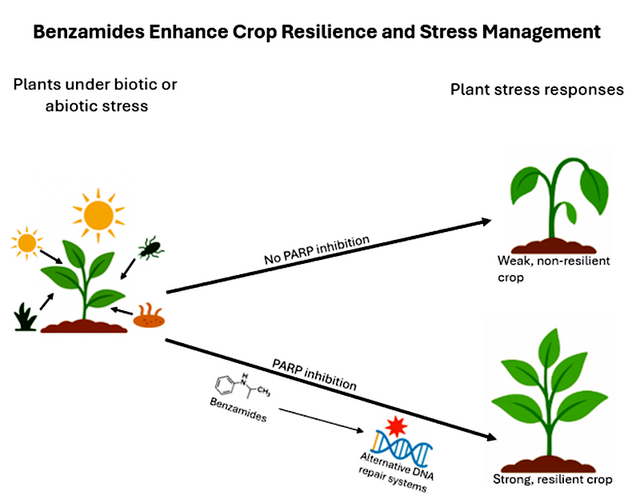
Benzamides boost crop resilience by inhibiting poly(ADP-ribose) polymerase (PARP) to enhance stress tolerance and, through their antimicrobial, herbicidal, and insecticidal derivatives, they offer broad protection for sustainable crop improvement

How benzamides could be used to inhibit plant stress, promote growth, and to manage crop resilience is summarized by authors Koetle, Motaung, and Amoo. In their review they delve into the mechanisms of action, applications, and potential benefits of benzamides, especially focusing on their role as poly(ADP-ribose) polymerase (PARP) inhibitors. They also describe, how benzamides modulate stress responses by inhibiting PARP activity, which is crucial for DNA repair and maintaining genomic stability. The review also highlights antimicrobial, herbicidal, and insecticidal properties of benzamides, which enhance plant defence mechanisms against various pests and diseases. In summary, benzamides offer multiple approaches to enhancing crop resilience and stress management, with significant implications for sustainable agriculture.

Read whole paper open access in our scientific journal Plant Biology (2025)

DOI: 10.1111/plb.70150
Plant Biology · DBG

Review: Pteridophyte chitinases - a promising resource for sustainable biopesticides

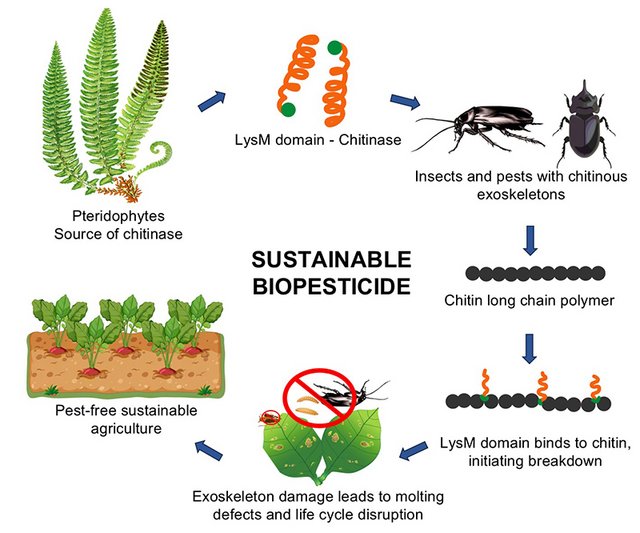
Potential of pteridophyte-derived chitinases as promising candidates for the development of biopesticides in sustainable agriculture, characterized by unique structural and functional features.

In their review authors Annapoorneshwari, Sharma, and Hegde highlight the need for increased research on pteridophyte chitinases to harness their potential as valuable resources for cutting-edge biopesticides and other biotechnological applications, since chitinases catalyse the degradation of chitin, a major component of fungal cell walls and arthropod exoskeletons. They therefore summarize current research results on fern chitinases, particularly in Pteris ryukyuensis and Equisetum arvense, that revealed distinct features, such as LysM domains, which enhance chitin-binding and antifungal activity. They also describe results on thermal stability, specific binding to chitin oligosaccharides, and the behaviour of engineered multimeric LysM domains fused with catalytic domains. These findings highlight the potential of pteridophyte chitinases in developing improved biopesticides against fungal pathogens. The unique
evolutionary position of the over 450 million years old pteridophytes,  including ferns and lycophytes, among non-vascular and seed plants suggests they may harbour additional novel chitinase variants with diverse biochemical properties.

Read whole paper in our scientific journal Plant Biology (2025) 

(DBG's members are able to access all Plant Biology papers via our intranet).

DOI: 10.1111/plb.70093
Plant Biology · DBG

Review: The tasiR-ARF pathway in plants - origin, functions, and interplay of miR-390, tasiRNAs and ARF3

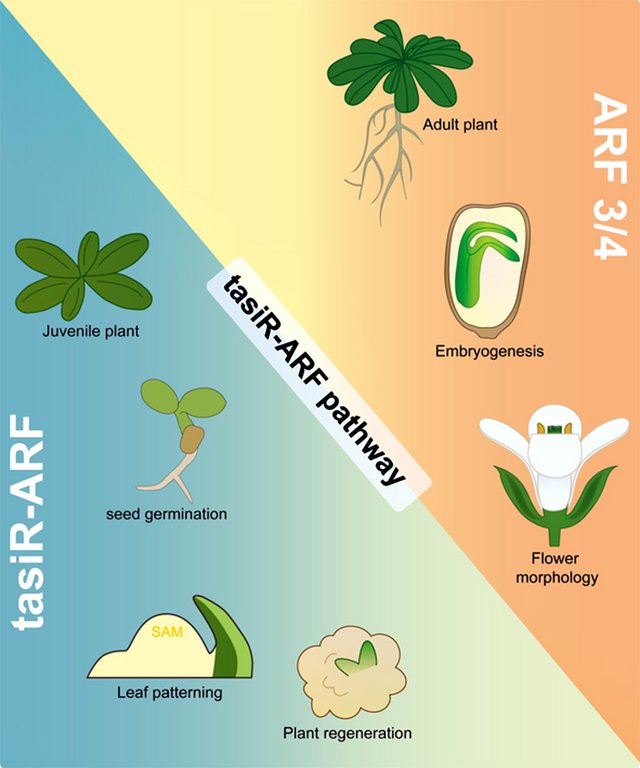
Trans-acting small interfering RNAs (tasiRNAs) that silence a subset of Auxin Response Factors (ARF) are crucial for plant growth, developmental timing, proper organ patterning, and coping with stress.

The versatility of the tasiR-ARF pathway in land plants according to known developmental and environmental responses where the phytohormone auxin plays an essential role, is discussed in this review by authors López-Ruiz, Juárez González, Jiménez-Ortega, Reyes, and Dinkova. The biogenesis of Trans-acting small interfering RNA (tasiRNAs), only found in plants, requires an initial miRNA-mediated cleavage of RNA precursors transcribed from TAS genes. TasiRNAs act in trans to silence gene expression by cleaving mRNAs with sequences partially complementary to their own. The miR390-TAS3-ARF pathway is highly conserved among land plant lineages and exerts its function by silencing a subgroup of Auxin Response Factor (ARF) genes; these tasiRNAs are termed tasiR-ARFs. Many downstream auxin signals are mediated by ARFs. These pathway functions are critical for plant growth, developmental timing, and correct organ patterning, such as leaf morphology and polarity, lateral root architecture, and flowering, as well as coping with stress. The phenotypes caused by mutations affecting tasiR-ARF production vary across plant species. One way to unify the diverse roles of this pathway would be through auxin response integration, possibly by exploring the evolution of ARF3 transcription factors and downstream genes.

Read whole paper open access in our scientific journal Plant Biology (2025)

DOI: 10.1111/plb.70154
Plant Biology · DBG

Viewpoint: Why tropical forests vary in their response to hydrologic changes and implications for modelling

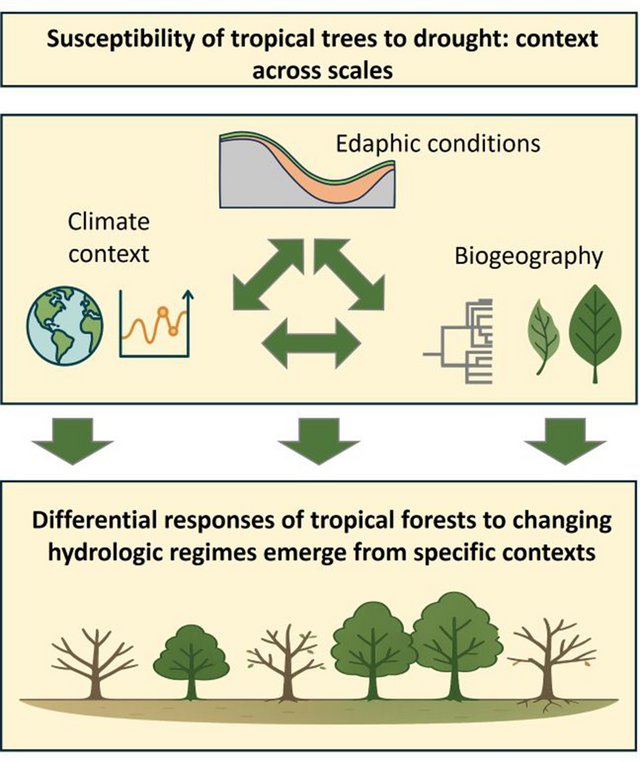
Tropical forests vary in their response to changing hydrologic regimes because past climate, soils, and evolutionary history influence how their constituent trees will respond.

As authors Cheesman and Cernusak lay out in their article "Susceptibility of tropical trees to drought: Context across scales" that the variability in their responses should be understood in the context of interacting legacies across scales. They describe

  • continental scales, where evolutionary history and past climatic filters have left distinct imprints on forest composition, and 
  • landscape scales, where edaphic and hydrological heterogeneity constrain species distributions and
    functional strategies. 

They finally highlight the importance of integrating historical and environmental filters into predictive models of tropical forest futures. 

Read whole paper in our scientific journal Plant Biology (2025) 

(DBG's members are able to access all Plant Biology papers via our intranet).

DOI: 10.1111/plb.70156
Plant Biology · DBG

Review: How multiple plant hormones orchestrate the success of flowering and plant reproduction

The review unpacks hormonal networks in flower development, revealing how ‘bud to bloom’ transitions shape yield and plant resilience.

In the article “Bud to bloom”—hormonal coordination in floral initiation” the authors Baral, Vainer, Melzer, Hause, and Panda delve into current knowledge and address lingering questions regarding hormone-mediated flower development. They summarize current knowledge of this complex network of multiple plant hormones that orchestrate plant reproduction and address the significant gaps in our understanding of hormonal regulation and the intricate crosstalk between hormones. This opens a way for innovative strategies in effective fruit set management and crop improvement.

Read whole paper open access in our scientific journal Plant Biology (2025) 

DOI: 10.1111/plb.70089
Plant Biology · DBG

Review: Duckweeds - model organisms for research on plant sterols and steroids

Duckweeds (Lemnaceae), the fastest-growing angiosperms and promising vegan protein source, offer a powerful model to address key questions in plant physiology.

The authors Klein, Appenroth and Sree summarize the knowledge on the very productive monocot Duckweed and its possible role as a powerful model to address key questions and problems in plant physiology, with a strong focus on sterol and steroid biology. Especially since Lemnaceae are a promising vegan protein source useful as animal feed and in human nutrition. The authors provide details on biosynthesis and function of phytosterols, sterol conjugates, brassinosteroids, and specialized steroidal metabolites, such as cardenolides. And they also discuss how current knowledge can be translated to solve agricultural and industrial problems.

Read whole paper open access in our scientific journal Plant Biology (2025) 

DOI: 10.1111/plb.70095
Plant Biology · DBG

Review: hydraulic traits and water use strategies of mountain shrubs and dwarf shrubs

Shrubs show a wide range of hydraulic strategies to achieve a balanced and favourable water status in mountain areas.

The authors Musso, Ganthaler, and Mayr not only summarize a literature review on a total of 104 publications on the water use strategies of mountain shrubs in which they focus on main hydraulic traits, water uptake, transport and release, as well as hydraulic limitations in summer and winter. In the review "Global variability in hydraulic traits and water use strategies of mountain shrubs and dwarf shrubs" they also measured leaf cuticular conductance in selected Alpine species. The dataset revealed a wide range of specific hydraulic conductivity (ks; 0.8–25.8 × 10⁻⁴ m2s-1 MPa-1), with highest values in tundra shrubs, and of the water potential at 50% conductivity loss (Ψ50; -11.8 to -0.29 MPa), with lowest values in steppe and temperate dry summer species. Deep-rooted shrubs from arid environments had access to more reliable water sources, while others relied on shallow but nutrient-rich soil water. No clear trend was observed along elevation or precipitation gradients, suggesting a wide range of hydraulic strategies to achieve a balanced water status. The authors also address the gaps in the geographic distribution of available studies.

Read whole paper open access in our scientific journal Plant Biology (2025)

DOI: 10.1111/plb.70088
Plant Biology · DBG

Review: how trees and forests will respond to increasingly unpredictable climate with compound droughts

Physiological and ecological responses of trees to emerging compound droughts from a water demand and supply perspective, as well as the role of acclimation and consequences for ecosystem-level functions.

In the article "Impact of emerging compound droughts on forests: A water supply and demand perspective" the authors C. Werner,  M. Bahn,  T. E. E. Grams,  C. Grossiord,  S. Haberstroh,  G. Lenczner,  D. Tuia,  H. Vallicrosa not only summarize physiological and ecological responses of trees to emerging compound droughts, but also explain the role of acclimation and consequences for ecosystem-level functions. They explore the physiological and ecological mechanisms underlying tree water and carbon regulation during these extreme conditions, focusing on the balance between water demand and supply, the role of acclimation, and its consequences for ecosystem-level functions. By examining the mechanisms at play from the organ to the ecosystem-scale, they provide a comprehensive understanding of how trees and forests are likely to respond to an increasingly unpredictable climate with a higher likelihood of compound
droughts.

Read whole paper open access in our scientific journal Plant Biology (2025) 

DOI: 10.1111/plb.70080
Plant Biology · DBG

Review: drought responses in ornamental plants for horticulture and strategies for resilience

How drought stress alters the visual appeal and ecological function of ornamental plants and innovative strategies to enhance their resilience.

In their review "Drought-induced aesthetic decline and ecological impacts on ornamentals: mechanisms of damage and innovative strategies for mitigation" the authors S. Chachar, N. Ahmed, and X. Hu summarize drought responses in ornamental plants by emphasizing hormone regulation, antioxidant defence, and gene expression changes. They focus on the dual challenge of ensuring drought tolerance while preserving aesthetic traits, which sets ornamentals apart from other plant types. The authors present innovative management strategies, such as genetic engineering (e.g., CRISPR-Cas9), transcription factor manipulation, and exogenous applications of hormones and biostimulants to enhance resilience, as well as solutions to mitigate drought-induced damage. This review underscores the urgent need for integrated molecular, physiological, and horticultural strategies to balance these demands, offering a roadmap to sustain the aesthetic and ecological contributions of ornamentals in an era of increasing climate variability. 

Read whole paper in our scientific journal Plant Biology (2025) 

(DBG's members are able to access all Plant Biology papers via our intranet).

DOI: 10.1111/plb.70074
Plant Biology · DBG

Review: Sustainable production of capsaicinoids through organellar genome editing

Recent advances for genetic improvement of Chilli peppers

In their review "Genome blaze: engineering chilli pepper chloroplasts for sustainable production of capsaicinoids through organellar genome editing" the authors M. Bulle,  S. Abbagani,  A. Raza summarize recent advances for genetic improvement of Chilli peppers, enriched with heightened levels of phytochemicals, such as capsinoids (CATs) and capsaicinoids (CAPs) with potential health benefits. The expression of specific genes is crucial to stimulate the CAT and CAP levels in response to environmental conditions. The authors also highlight recent advancements in CRISPR/Cas and plastid engineering within Capsicum, coupled with application of base editing approaches for editing plant organelle DNA. The review also assesses the challenges and opportunities in the pursuit of commercial and sustainable production of bioactive compounds specific to Capsicum species.

Read whole paper in our scientific journal Plant Biology (2025)  

(DBG's members are able to access all Plant Biology papers via our intranet).

DOI: 10.1111/plb.70067
Plant Biology

Our new Viewpoint Editor

Professor Rob Roelfsema (Würzburg) now is the Viewpoint Editor at our journal Plant Biology. He is looking forward to your viewpoints, short papers of approximately three published pages, with one or two figures with the following topics:

  • New insights in a hot topic in plant biology
  • Critical examination of known methods and approaches
  • New emerging techniques
  • Novel conceptual ideas or approaches in developing fields

Feel free to contact him at Würzburg University, if you have any questions. Please note that scientists in Germany and several other European countries can publish open access in Plant Biology without costs (https://deal-operations.de/en/here-is-the-deal) and please contact your library if these conditions apply to your Institution.

Actualia

Zeitschrift Plant Biology: neue Redaktionsleitung, Reviews und Open Access

Prof. Dr. Christiane Werner ist Editor-in-chief unserer Zeitschrift. Foto: privat

Seit Jahresbeginn ist Prof. Dr. Christiane Werner vom Lehrstuhl Ökosystem-Physiologie an der Universität Freiburg, neue editor-in-chief unserer wissenschaftlichen Zeitschrift Plant Biology. Werner war mehrere Jahre Co-Editorin und hat in dieser Zeit gemeinsam mit ihrem Vorgänger, Prof. Dr. Heinz Rennenberg, mehrere Formate und Ideen entwickelt, um die Zeitschrift weiter zu entwickeln: Die neuen kurzen Forschungs-Reviews eignen sich beispielsweise für PostDocs und andere Nachwuchskräfte, die ihr eigenes Thema bekannt machen und ihre Sichtbarkeit in der Wissenschaft erhöhen möchten. Ansprechpartner dafür ist Review-Editorin Dr. Susann Wicke (HU Berlin). Werner freut sich, dass sie Dank Rennenbergs herausragenden Arbeit ein gut etabliertes Journal weiterführen kann, dessen Impact Factor Rennenberg in den 17 Jahren seiner Redaktionsleitung nahezu verdoppelte. Die Plant Biology erhält jedes Jahr rund 800 Artikel-Einreichungen. Gemeinsam mit ihrem vielköpfigen Redaktionsausschuss möchte die neue Leiterin weitere Maßnahmen umsetzen, um die Sichtbarkeit des Journals zu erhöhen, wie etwa mehr Special Issues herauszugeben oder Hinweise in Twitter und anderen Sozialen Medien zu platzieren. Werner ist gespannt auf Artikel Forschungsergebnisse sowie Meinungsbeiträge aus der Pflanzenforschung, die Dank des sog. DEAL-VertragsOpen Access publiziert werden können, sofern der/die Erst-Autor*in von einer deutschen Wissenschaftseinrichtung stammt. Unterstützt wird Werner im Freiburger Redaktionsbüro von Annette Schlierenkamp.

Zur Zeitschrift Plant Biology

Weiterlesen
DBG

Über unsere Fachzeitschrift

Plant Biology ist ein internationales Fachjournal mit breitem Themenspektrum aus allen botanischen Disziplinen, wie Physiologie, Molekular-, Zell- und Entwicklungsbiologie, Genetik, Ökologie, Evolution, Ökophysiologie, Pflanzen-Mikroben-Interaktionen und Mykologie. Die DBG veröffentlicht Plant Biology gemeinsam mit der Königlichen Botanischen Gesellschaft der Niederlande. Herausgeber der Plant Biology sind Prof. Dr. Christiane Werner (Freiburg) und Prof. Dr. J. Theo M. Elzenga (Groningen).

Papers, Reviews, Themen und Thesen

In Plant Biology publizieren Wissenschaftlerinnen und Wissenschaftler Forschungsergebnisse im Original oder verfassen Reviews. In der Rubrik "Acute Views" diskutieren sie aktuelle Themen und Thesen und können provokante Ansichten darstellen. Zuvor begutachten unabhängige Experten in einem zügigen Review-Prozess die eingereichten Artikel. 

Kostenfrei Open Access publizieren

Mitglieder von deutschen akademischen institutionen können ihre Artikel über pflanzenwissenschaftliche Themen kostenfrei Open Access in unserer Zeitschrift Plant Biology publizieren (die Article Processing Charge, APC entfällt dann, wegen des DEAL-Agreements). Seit 15. Februar 2023 stellt die neue Website des DEAL-Konsortiums deutschen Einrichtungen, wissenschaftlichen Autor*innen und der interessierten Öffentlichkeit alle Informationen rund um DEAL unter https://deal-konsortium.de/ zur Verfügung und unterstützt sie dabei, die umfangreichen Leistungen der Verträge bestmöglich zu nutzen.

Impact Factor

Plant Biology’s Impact Factor has now reached 3.87, which is a strong increase on 2020 (3.08 in 2020, Source: Journal Citation Reports, Clarivate Analytics). Plant Biology is now ranked 58/239 in the Plant Science Category, which is the top quartile.

Historisches und neuer Verlag

Plant Biology ist die Nachfolgerin der von 1882 bis 1987 von der DBG herausgegebenen "Berichte der Deutschen Botanischen Gesellschaft" und der von 1988 bis 1998 erschienenen "Botanica Acta".

In den Jahren 1999-2007 erschien das Fachjournal beim Thieme-Verlag. Seit Januar 2008 erscheint das Fachjournal der Gesellschaft nun alle zwei Monate bei Wiley-Blackwell.

Zugang

Mitglieder der DBG können über das Intranet auf alle Artikel des Fachjournals zugreifen.

Die einzelnen Ausgaben stehen hinter einer Bezahl-Schranke auch auf der Verlags-Website zur Verfügung.

Privacy Policy of the journal Plant Biology (GDPR)

> Privacy Policy of the journal Plant Biology (GDPR)